

Engineered for sweatproof endurance, ultra-low latency RF performance, and global CE compliance standards.
In high-performance acoustic design, creating true CE-certified sweatproof earbuds presents significantly more complex engineering challenges than standard IPX4 rain-resistant earphones. Human sweat is an aggressive electrolyte solution containing sodium chloride (0.2%–0.5%), lactic acid, urea, and fatty acid contaminants. When subjected to intense athletic activity, warm micro-climates inside the external auditory canal accelerate chemical corrosion across printed circuit boards (PCBs), acoustic transducer diaphragms, and charging contacts.
Conventional waterproof earbuds rely solely on perimeter silicone gaskets, which degrade over thermal cycling and mechanical stress. Our manufacturing facilities employ a proprietary two-tier protective system:
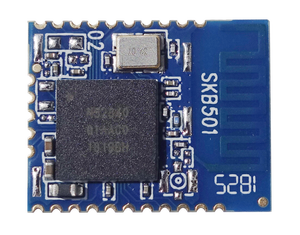
A. Vacuum-Deposited PVD Nano-Coating: Every assembled internal PCB board, including Bluetooth transceivers (such as nRF54 and BLE 5.3/5.4 SOCs) and battery management circuits, undergoes high-frequency plasma polymerization. This coats every solder joint and SMD component with an ultra-thin (30–50nm) fluoropolymer layer that repels moisture at a molecular level, passing 96-hour continuous salt spray testing (ASTM B117 standards).
B. Oleophobic Acoustic Meshes: Acoustic ports require atmospheric pressure equalization without allowing liquid ingress. We integrate expanded polytetrafluoroethylene (ePTFE) acoustic membranes rated for IPX7 immersion (1 meter for 30 minutes) while maintaining an insertion loss of under 0.5dB across the 20Hz–20kHz frequency spectrum.
Before issuing CE (Conformité Européenne) Declaration of Conformity (DoC), every production batch undergoes mandatory environmental stress screening (ESS):
Submerged in pH 4.5 artificial sweat under 1.2 ATM pressure cycles for 48 hours to evaluate seal integrity and electrochemical migration resistance.
Gold-plated Pogo-pin charging contacts are coated with anti-corrosion rhodium-ruthenium alloys to prevent electrolytic erosion during charging while damp.
Cooled to -20°C and rapidly elevated to +60°C while subject to 5G acceleration to ensure structural housing integrity without micro-cracking.
Key technological shifts shaping global B2B sourcing, institutional procurement, and retail supply chains.
Next-generation procurement contracts prioritize modules featuring Bluetooth 6.0 Channel Sounding for high-precision spatial awareness and distance measurement. Combined with LC3 (Low Complexity Communication Codec), B2B buyers can deliver high-fidelity 32-bit audio at half the bitrate of classic SBC, drastically reducing power consumption and extending battery life in compact sweatproof housings.
Driven by user safety demands during outdoor sports, procurement is rapidly shifting from traditional in-ear silicone tip designs to open-ear clip models (e.g., Pebbles Air series). These designs leave the ear canal unobstructed while delivering directional audio via localized acoustic beamforming, requiring specialized sweatproof coatings for exposed speaker grills.
Regulatory authorities in the European Union (CE RED Directive EN 50332) and global educational institutions are enforcing strict acoustic pressure caps (max 85dB/95dB SPL). Modern sports and kids' earphone procurement mandates tamper-proof hardware volume limiting to protect auditory health under extended use.
As a specialized manufacturer operating since 2005, our engineering roadmap aligns directly with OEM/ODM client expectations for scalable quality, environmental compliance, and rapid prototyping.
To eliminate reliance on manual liquid adhesives—which deteriorate when exposed to acidic sweat—our factory floors implement 6-axis robotic automated dispensing of UV-curable structural adhesives. Enclosures are sealed using high-frequency ultrasonic welding, achieving structural air-tightness exceeding IPX7 specifications while reducing casing weight by up to 14%.
With eco-design directives taking center stage across EU and North American markets, our custom earbud molds now support medical-grade liquid silicone rubber (LSR) ear-tips. LSR minimizes skin irritation during sweat-heavy workouts and withstands degradation from skin lipids. Housing plastics can be specified with up to 65% Post-Consumer Recycled (PCR) ABS materials certified under Global Recycled Standard (GRS).
Over two decades of acoustic specialization, proven supply chain stability, and rigorous CE compliance verification.
Every product line—ranging from low-latency TV transmitters to sweatproof sports earbuds—comes with verified CE test reports (EN 62368-1 safety, EN 300 328 RF, EN 301 489 EMC). We provide full technical documentation files (TCF) required by European customs authorities.
Our dedicated institutional logistics division coordinates bulk procurement for school districts, clinical hearing aid programs, commercial airlines, and hospitality networks. We support custom firmware modifications, barcode serialization, and private-label packaging.
Equipped with Audio Precision (APx555) analyzers and semi-anechoic RF chamber facilities, our engineering group works directly with OEM partners to tune target frequency response curves (Harman Target or custom EQ) and optimize antenna impedance matching for zero dropouts.
Answers to crucial compliance, customization, and supply chain questions for procurement directors.
CE compliance for active wireless earbuds requires passing three primary directives under the Radio Equipment Directive (RED 2014/53/EU): EN 62368-1 for electrical battery safety and acoustic shock prevention, EN 301 489-1/-17 for electromagnetic compatibility (EMC), and EN 300 328 for 2.4GHz wideband transmission spectrum efficiency. Moisture resistance is validated according to EN 60529 IPX ratings, accompanied by REACH and RoHS chemical safety clearance for skin-contact materials.
For standard catalog products with custom laser branding or silk-screen logos, our MOQ starts at 500 units per SKU. For full OEM custom tooling, bespoke color colorway matching (Pantone PMS), and tailored retail box artwork, the standard manufacturing order threshold is 1,000 to 3,000 units depending on housing complexity.
Corrosion inside charging cradles occurs when wet earbuds are placed into contact with energized pogo pins. Our designs mitigate this through integrated short-circuit protection ICs, hydrophobic dynamic seal rings surrounding the internal magnets, and optional post-charging delay logic that senses moisture resistance before applying full fast-charging current.
Yes. We provide golden engineering samples (T1/T2 prototypes) complete with RF test reports and pre-loaded firmware for client-side lab evaluation. Sample dispatch typically takes 3 to 7 business days for standard models and 14 days for customized acoustic tuning profiles.