

Explore our industrial-grade, precision-engineered cable solutions designed for consumer electronics, professional audio monitoring, medical diagnostic equipment, and aviation systems.
As global electroacoustic brands, medical diagnostic device manufacturers, and automotive OEM suppliers evaluate supply chain resilience, China remains the epicenter of high-precision audio cable engineering and manufacturing. Driven by advances in metallurgy, surface treatment, automated micro-soldering, and polymer elastomer extrusion, Chinese headphone cable factories have evolved from basic assembly plants into advanced R&D partners capable of meeting strict acoustic, mechanical, and regulatory standards.
This whitepaper provides procurement directors, audio engineers, and product managers with an authoritative breakdown of conductor metallurgy, shielding architectures, compliance frameworks, and global procurement trends defining the headphone cable manufacturing sector in 2026 and beyond.
Modern audio cable performance is defined not only by resistance per meter, but by dielectric losses, microphonic suppression, strain-relief flex life, and compliance with hearing safety and clinical calibration benchmarks (such as ANSI S3.6 for audiometry cables and EN 50332 hardware volume limits).
Global procurement metrics indicate a decisive shift from standard commodity AUX cables toward specialized hybrid cables, high-purity conductors, and smart digital-analog converter (DAC) integrated cords. Buyers who understand these technical evolutions gain significant cost and product differentiation advantages.
In high-fidelity (Hi-Fi) consumer audio and professional in-ear monitor (IEM) applications, oxygen-free copper (OFC) with 99.99% purity has become the baseline. Procurement demand is accelerating toward Ohno Continuous Casting (OCC) copper boasting 99.9999% (6N) purity, as well as silver-plated OCC (SPC) hybrid conductors. The single-crystal structure of OCC minimizes grain boundaries per meter, virtually eliminating signal reflection and phase distortion at ultra-high audio frequencies.
With smartphones and laptops eliminating physical 3.5mm jacks, modern headphone cable factories in China are embedding ultra-compact System-on-Chip (SoC) DACs directly inside metal jack shells. These active cables support high-resolution 24-bit/192kHz PCM audio decoding and active noise cancellation (ANC) telemetry, allowing traditional analogue headset designs to interface directly with modern digital ecosystems without external dongles.
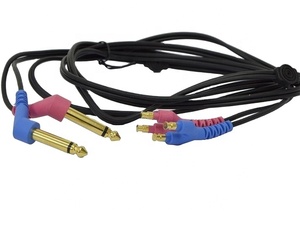
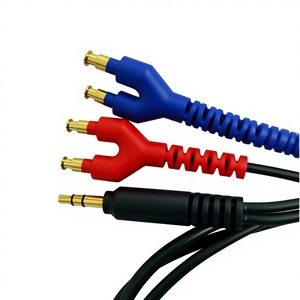
A specialized segment of China’s headphone cable manufacturing industry focuses on medical-grade air conduction and bone conduction cables for diagnostic audiometers (such as TDH39, DD45, and Radioear B71 transducers). Procurement for medical cables requires rigorous adherence to low-capacitance dual-mono configurations, gold-plated split pins, non-toxic bio-compatible outer jackets, and strict impedance tolerance matching to preserve sound pressure level (SPL) calibration integrity across diagnostic frequencies (125 Hz to 8000 Hz).
Regulatory mandates including EU RoHS 3, REACH SVHC, and California Proposition 65 are driving factories to phase out traditional phthalate-heavy PVC outer jackets. Procurement trends heavily favor Thermoplastic Elastomers (TPE) and Thermoplastic Polyurethanes (TPU). These materials offer superior tensile elasticity, resistance to skin oils and sweat, low microphonic cable noise, and full recyclability.
The table below summarizes the technical specifications, mechanical characteristics, and target applications for primary audio cable conductors produced in top Chinese manufacturing facilities:
| Conductor Type | Purity Level | Resistivity (Ω·m) | Flex-Life Endurance | Primary B2B Target Application |
|---|---|---|---|---|
| Bare Copper (BC) | 99.9% Standard | 1.72 × 10⁻⁸ | 10,000 Cycles | Cost-effective Consumer AUX Cables, Car Audio |
| Oxygen-Free Copper (OFC) | 99.99% (4N) | 1.68 × 10⁻⁸ | 15,000 Cycles | Studio Monitors, Commercial Headsets, Aviation Cables |
| Ohno Continuous Cast (OCC) | 99.9999% (6N) | 1.65 × 10⁻⁸ | 18,000 Cycles | Audiophile IEMs, Premium Hi-Fi Replacement Cords |
| Silver-Plated Copper (SPC) | 99.99% Cu + Pure Ag | 1.59 × 10⁻⁸ | 15,000 Cycles | High-Frequency Detail Audio, Gaming Headsets |
| Kevlar-Reinforced OFC Braid | 99.99% + DuPont Kevlar | 1.70 × 10⁻⁸ | 30,000+ Cycles | Call Center RJ9 Cables, Heavy-Duty Industrial Headsets |
| Shielded Dual-Mono Litz | Medical OFC Class II | 1.68 × 10⁻⁸ | 25,000 Cycles | Clinical Audiometer Cables (TDH39, DD45) |
Individually insulated copper strands braided in specific geometric ratios prevent skin effect and proximity effect, preserving high-frequency signal clarity and preventing inter-strand cross-talk.
Combining spiral aluminum-mylar foil with 95% coverage OFC braided shielding effectively rejects electromagnetic interference (EMI) and radio frequency interference (RFI) in noisy environments.
Injection-molded SR (Strain Relief) boots utilizing multi-stage segmented flex zones absorb bending torque, ensuring survival through rigorous 20,000+ cycle 90° bend testing.
Reputable Chinese headphone cable factories execute multi-tier quality assurance frameworks spanning raw material intake to final acoustic validation:
Leveraging deep supply chain integration, state-of-the-art laboratory testing, and extensive OEM/ODM experience to power global audio brands.
From copper wire drawing, enamel insulating, and precision strand twisting to automated TPE jacket extrusion and custom connector over-molding, our vertically integrated facilities guarantee total quality control and competitive factory-direct pricing.
We offer end-to-end custom mold engineering for specialized jack housing designs, custom color-matching (Pantone accurate), brand logo laser etching, and unique cable geometries designed specifically to your product's mechanical envelope.
All production lines operate under ISO 9001 quality management and ISO 13485 medical device standards. Our products fully comply with CE, RoHS 3, REACH, FCC, and California Proposition 65 regulations for global market distribution.
Clear, engineering-focused answers to the most common questions raised by procurement managers, importers, and original equipment manufacturers.
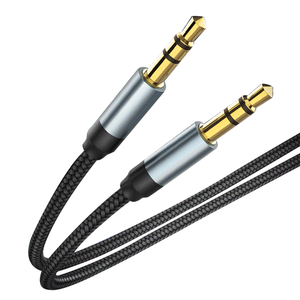
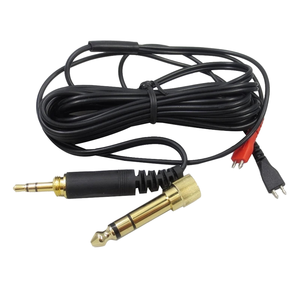
For standard stock configurations (such as standard 3.5mm AUX cords or replacement cables), MOQs start at 500 to 1,000 units per batch. For fully customized OEM cables requiring dedicated extrusion runs, custom TPE/braided jacket colors, or specialized connector molds, standard MOQs typically range from 2,000 to 3,000 meters of raw cable extrusion.
Our medical audiometer cable production uses specialized high-purity dual-mono shielded conductors maintaining strict micro-ohm resistance tolerances per channel. Connectors are electroplated with heavy gold layers to eliminate contact oxidation. Every batch undergoes 100% frequency response and capacitance continuity checks to ensure seamless integration with standard ANSI S3.6 and ISO 389 audiometric calibration equipment.
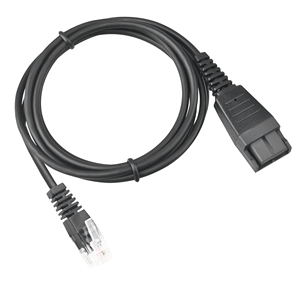
Braiding high-tensile DuPont Kevlar synthetic fibers into the central copper conductor bundle dramatically increases axial tensile strength (withstanding pull forces over 150 N) without increasing cable stiffness. This construction is highly recommended for high-wear environments such as call centers (RJ9/RJ11 headsets), classroom headsets, and aviation adapters.
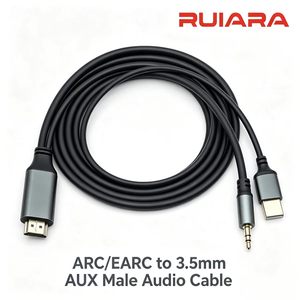
Yes. We manufacture active ARC/eARC to 3.5mm AUX and optical audio converter cables featuring integrated 5V USB-powered DAC micro-chipsets. These cables automatically extract PCM digital audio streams from television HDMI ARC ports and output low-latency analog signals ideal for soundbars, headphones, and assistive listening systems.
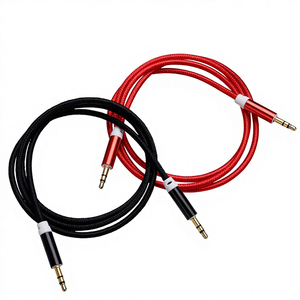
Choose TPE for soft feel, flexibility, eco-friendliness, and low microphonic noise. Choose TPU for extreme abrasion resistance, oil resistance, and superior durability in harsh environments. Choose Nylon Braided for premium consumer retail aesthetics and anti-tangle properties. Choose PVC for high-volume, budget-conscious commercial applications.
During pre-production engineering validation (EVT), sample cable assemblies are mounted on automated strain-relief bending test machines. The cables undergo 90-degree left-and-right flex cycles under a 200g to 500g load at 60 cycles per minute. Standard commercial grades pass 5,000 cycles, while our heavy-duty industrial cables are engineered to exceed 20,000 to 30,000 continuous cycles without conductor fatigue or insulation tearing.
Sample prototyping with existing tooling takes approximately 5 to 7 working days. Rapid 3D printing and custom connector tooling fabrication require 15 to 20 days. Once pre-production samples are approved, standard factory production lead time is 25 to 30 days depending on raw material sourcing and order volume.
Every export shipment is supplied with a comprehensive quality dossier, including a Certificate of Analysis (CoA), RoHS 3 and REACH compliance test reports, ISO 9001 inspection certificates, and factory Outgoing Quality Control (OQC) test summaries for electrical continuity and acoustic impedance matching.
Partner directly with China's leading OEM/ODM headphone cable manufacturer. Our engineering team is available to discuss custom specifications, provide instant factory quotations, and dispatch certified evaluation samples.
Inquire Now