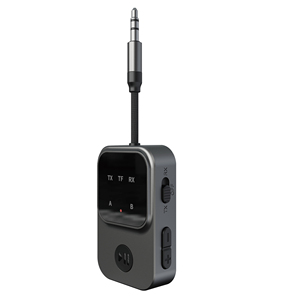
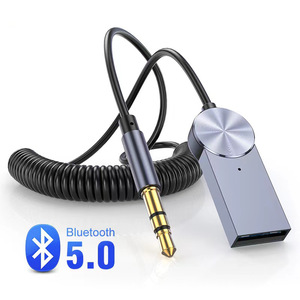
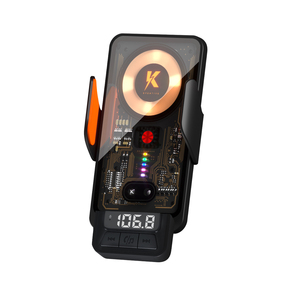
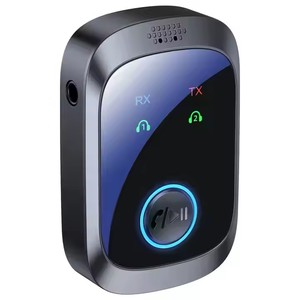
Architectural Blueprint: Navigating China Wholesale Bluetooth Adapter Manufacturing
The global wireless connectivity market is undergoing a seismic paradigm shift. As consumer electronics transition from legacy Bluetooth Classic (BR/EDR) protocols toward high-efficiency LE Audio architectures, B2B procurement managers and hardware OEMs must re-evaluate their supply chain partnerships. Sourcing from a premier China Bluetooth adapter factory requires a rigorous technical evaluation of chipsets, radio frequency (RF) tuning capability, firmware stack modification, and compliance verification.
Rooted in over two decades of electro-acoustic design and RF innovation—tracing our engineering pedigree back to 2005—our manufacturing complex serves as a primary supplier for international brands, educational institutions, airlines, and industrial IoT system integrators. Modern wholesale Bluetooth adapters are no longer simple plug-and-play dongles; they represent multi-protocol processing hubs capable of handling high-bitrate audio streaming, real-time spatial positioning, mesh networking, and dynamic power optimization.
1. RF Front-End Optimization & PCB Layout Integrity
The performance bottleneck of any wireless transceiver lies within its RF front-end design. Cheap wholesale adapters often suffer from poor receiver sensitivity, leading to frequent packet drops, audio crackling, and constrained operational range. Our China-based engineering facilities utilize advanced vector network analyzers (VNAs) to fine-tune trace antennas, ceramic patch antennas, and external dipole configurations.
- Impedance Matching: Strict 50-ohm microstrip line matching prevents signal reflection and minimizes VSWR (Voltage Standing Wave Ratio) below 1.2:1 across the entire 2.402 GHz to 2.480 GHz spectrum.
- Noise Isolation: Four-layer PCB stack-ups isolate digital processing planes from analog RF signals, suppressing electromagnetic interference (EMI) generated by high-speed USB controllers and power management ICs (PMICs).
- Coexistence Filters: Integrated bandpass filters mitigate mutual interference with co-located Wi-Fi 6 (802.11ax) networks and Zigbee/Thread smart home devices.
2. Silicon Ecosystem: Nordic Semiconductor vs. Realtek vs. Qualcomm
Selecting the appropriate System-on-Chip (SoC) defines the commercial positioning of your product line. As an authorized OEM/ODM manufacturer, we maintain strategic silicon partnerships with industry leaders:
- Nordic Semiconductor (e.g., nRF54L15 / nRF5340): Ideal for ultra-low-power industrial BLE mesh node deployments, smart utility metering, and low-latency directional sensing.
- Qualcomm (e.g., QCC308x / QCC518x): Designed for flagship consumer audio adapters requiring Snapdragon Sound™, aptX™ Adaptive, and zero-latency dual-link broadcast.
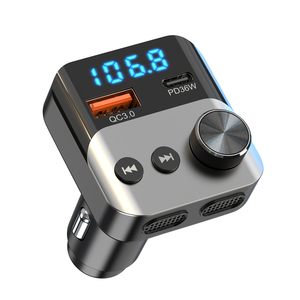
- Realtek & Actions Semiconductor: Cost-optimized architectures tailored for high-volume automotive FM transmitters, basic USB audio dongles, and budget consumer electronics.
Technical Evolution Matrix: Bluetooth Protocol Generations
When specifying OEM orders for global market distribution, enterprise buyers must align hardware capabilities with regional compliance standards and user expectations. Below is a structural comparison of current chipset specifications supported on our production lines:
| Specification Parameter |
Bluetooth 5.0 / 5.1 |
Bluetooth 5.3 / 5.4 |
Bluetooth 6.0 (Next-Gen) |
| Primary B2B Application |
Basic Data & Legacy Audio |
Low-Power IoT & Dual-Stream Audio |
Channel Sounding & Ultra-Low Latency |
| Supported Audio Codecs |
SBC, AAC, aptX |
SBC, AAC, LC3, aptX Adaptive |
LC3+, Auracast Broadcast Audio |
| End-to-End Latency |
120ms – 220ms |
30ms – 60ms |
<15ms (Zero-Perceived) |
| Spatial Distance Accuracy |
RSSI (Approximate ~3m) |
AoA / AoD Direction Finding (<1m) |
Channel Sounding (<10cm Precision) |
| Broadcasting Capability |
Point-to-Point / Limited Dual-Link |
Dual-Link Active Streaming |
Unlimited Auracast Receivers |
| Industrial Integration |
Utility Meters, Simple Dongles |
In-Flight Audio, Smart Home Hubs |
Pro Audio, High-Density Smart Cities |
Future Procurement Trends: 2025–2030 Market Foresight
Navigating procurement strategy requires understanding where the market is moving over a 3- to 5-year horizon. As search intent shifts from generic "Bluetooth dongles" to specialized industrial and consumer audio solutions, our R&D center is leading three primary innovation waves:
1. The Universal Adoption of Auracast™ Broadcast Audio
Auracast™ is transforming public and private audio distribution. In-flight entertainment systems, sports bars, airport terminals, and educational lecture halls are actively replacing legacy infrared and FM systems with Bluetooth LE Audio broadcast transmitters. B2B buyers specifying 2-in-1 transceivers should ensure support for multi-stream LC3 encoding to prevent product obsolescence.
2. Channel Sounding for High-Precision Location & Access Control
Introduced in the Bluetooth 6.0 specification, Channel Sounding provides secure, fine-grained distance measurement using phase-based ranging (PBR). This technology is fast becoming a standard requirement for automotive keyless entry, industrial tool tracking, and automated warehouse logistics, enabling sub-decimeter location accuracy without the cost penalties of Ultra-Wideband (UWB).
3. Convergence of Matter, Thread, and BLE Mesh in Smart Infrastructure
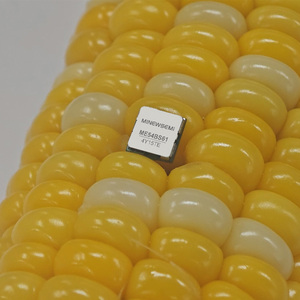
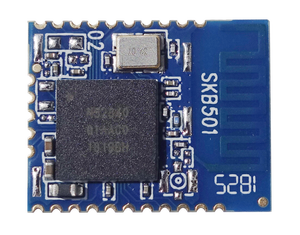
Single-purpose smart home dongles are being phased out in favor of multi-protocol gateway adapters. Modern commercial builds require unified USB hardware capable of acting simultaneously as a Matter Border Router, a Thread node controller, and a Bluetooth Mesh provisioner—such as our nRF54L15 ME54BS61 module.
Industrial Sourcing Guide: Standard OEM/ODM Manufacturing Workflow
Securing a competitive edge when sourcing from a China wholesale Bluetooth adapter factory requires a clear, standardized development roadmap. Below is our transparent 6-stage engineering process designed for procurement executives and hardware architects:
Phase 01
Specification Freeze
Selection of target SoC (Nordic/Qualcomm/Realtek), port selection (USB-C/AUX/Optical), and determination of operational temperature windows.
Phase 02
Gerber & Tooling Design
3D CAD enclosure modeling, PCB layout routing with impedance matching, and thermal simulation under continuous high-power transmission.
Phase 03
EVT / DVT Prototyping
Engineering Validation Testing (EVT) for RF output power verification, followed by Design Validation Testing (DVT) for mechanical drop and humidity endurance.