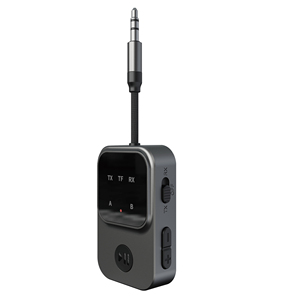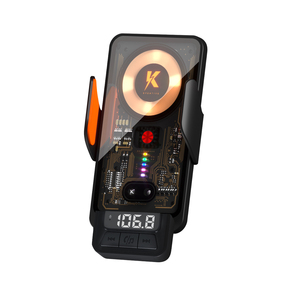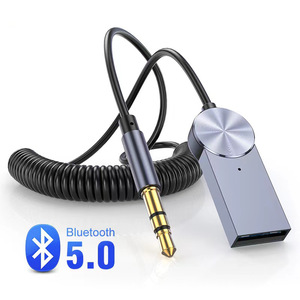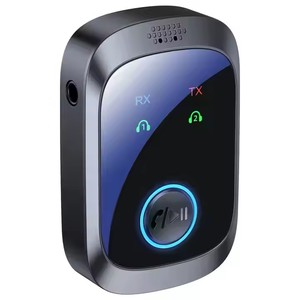

Explore our production-ready custom OEM kids' headphone platforms, Bluetooth 6.0/5.4 mesh transceiver modules, and dual-mode listening systems engineered for international school districts, retail brands, and enterprise fleets.
Selecting a custom OEM kids headphones factory requires a rigorous technical evaluation of acoustic limiting mechanics. For pediatric users, exposure to sound pressure levels (SPL) exceeding 85 decibels for prolonged periods can induce Noise-Induced Hearing Loss (NIHL). While consumer audio manufacturers frequently rely on software-driven equalization or digital signal processing (DSP) caps, certified OEM manufacturing mandates hardware-level intervention.
Software volume caps implemented within mobile operating systems or app-based GUIs are inherently vulnerable to bypass when connected to high-output analog amplifiers, audio interfaces, or aircraft seat-back entertainment hubs. Our acoustic engineering facilities integrate direct hardware resistor networks and Zener diode clamping circuits built straight into the PCBA architecture.
| Acoustic Metric / Feature | Standard Consumer Headphones | Software-Capped OEM Headphones | Our Hardware Limited OEM Platform |
|---|---|---|---|
| Maximum SPL Cap | 102 dB – 115 dB (Unregulated) | 85 dB (Source Dependent) | Strict 85 dB / 94 dB Hardware Cap |
| Over-Voltage Protection | None | Vulnerable to High-Power AUX | Zener Diode Voltage Clamping |
| Frequency Tuning (2kHz - 4kHz) | V-Shaped / Bass Heavy | Flat Uncalibrated Response | Pediatric Audiology Curve |
| EN50332 Sound Safety | Non-Compliant | Conditional Pass | Full EN50332-2 Certification |
| Bypass Vulnerability | High | High (EQ / Volume Boosters) | 0% Bypass Risk (Hardware Hardened) |
By constraining the current flow at the transducer level via matched impedance voice coils and precision passive filtering, our factory guarantees that regardless of source voltage spikes—whether plugged into an iPad, Chromebook, or high-gain stereo—the maximum output measured on an IEC 60318-4 artificial ear coupler remains strictly bounded at 85 dB SPL ± 3 dB.
Children's audio devices operate under harsh physical environments far exceeding standard consumer wear. School districts, institutional buyers, and retail OEM brands require modular strain relief, non-toxic polymers, and anti-strangulation cable geometries.
Constructed using BPA-free, phthalate-free thermoplastic elastomers (TPE) and medical-grade silicone. Certified under CPSIA Section 101, EU REACH SVHC, and EN71-3 safety regulations for direct skin contact.
Memory-polypropylene headbands capable of undergoing 180° complete torsional twist tests and 10,000+ flex cycles without plastic fatigue, snapping, or structural deformation.
Kevlar-braided wiring with 90-degree molded strain relief joints. Custom options include magnetic breakaway connectors to prevent socket damage during classroom use.
The global OEM kids headphone manufacturing ecosystem is undergoing a generational shift driven by technological convergence, digital learning mandates, and strict international environmental standards. Forward-looking procurement teams must align their supply chains with four critical macro trends:
Next-generation kids wireless headphones are moving away from legacy Bluetooth Classic to Bluetooth Low Energy (LE) Audio utilizing the LC3 codec. This enables multi-stream classroom broadcasting (Auracast), allowing a single teacher's transmitter or interactive display to broadcast synced audio to dozens of student headphones simultaneously with sub-20ms latency.
With modern educational tablets and Chromebooks eliminating the legacy 3.5mm analog jack, institutional procurement is prioritizing direct USB-C digital audio interfaces. Factory-integrated high-resolution Digital-to-Analog Converters (DAC) ensure low-noise digital transmission paired with hardware-enforced master volume caps.
Global retailers are enforcing strict ESG requirements. Future custom OEM designs feature snap-fit modular ear cushions, replaceable cables, and PCR (Post-Consumer Recycled) plastics, facilitating quick repairs at school IT departments rather than whole-unit disposal.
Since 2005, our engineering core—built on MEE Audio’s legacy of high-fidelity acoustic refinement and dedicated hearing health research—has delivered turn-key OEM/ODM manufacturing solutions to international distributors and institutional buyers.
Unlike trading companies or assembly-only suppliers, we maintain end-to-end control over industrial design, acoustic modeling, PCB layout, tooling creation, and SMT assembly.
Our engineering team designs custom passive attenuation circuits and Zener diode over-voltage clamping networks directly into the headphone ear-cup PCBA. Unlike software volume caps that rely on source signal attenuation, our hardware circuit clamps excess electrical energy before it reaches the 30mm/40mm neodymium drivers. This guarantees output stays below 85 dB SPL (or 94 dB SPL in high-noise modes) even when connected to high-gain external amplifiers or high-output educational laptops.
All OEM kids' headphones manufactured in our facility undergo mandatory third-party lab testing (SGS/TÜV/Intertek). We provide complete compliance documentation covering CPSIA (Lead and Phthalates), EU EN71 Parts 1-3 (Mechanical and Chemical Safety), California Proposition 65, RoHS 3.0, and REACH. Electrically, our wireless systems carry FCC-ID, CE-RED, TELEC, and SRRC RF certifications.
Yes. We offer dual-mode physical volume switches (e.g., an internal or recessed 85 dB / 94 dB toggle) enabling safe listening for quiet classroom settings and higher output for noisy travel environments like airplanes. Acoustic frequency curves are tuned via DSP or mechanical baffle damping to emphasize voice clarity (speech frequencies from 300Hz to 3kHz) for language learning applications while taming harsh high frequencies.
For standard OEM color customization and logo application on existing tooling, our standard MOQ starts at 1,000 units with a lead time of 25–30 days. For complete ODM projects requiring custom injection tooling, the industrial design and T1 sample phase takes 30–35 days, followed by mass production setup within 25 days post-sample sign-off.
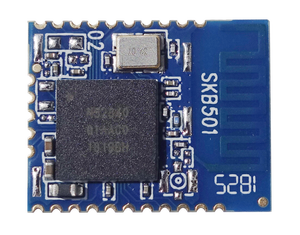
Our advanced Bluetooth 5.4/6.0 transceiver modules (such as our nRF54 and dual-mode transceivers) support Auracast broadcast audio and custom multipoint protocols. This allows a single master transmitter module plugged into a teacher's desk or interactive white board to stream low-latency audio simultaneously to an unlimited number of paired student headphones without channel crosstalk.
Each batch undergoes 100% inline acoustic testing via automated artificial ear couplers. Additionally, sample units undergo destructive physical testing: 10,000-cycle cord bend tests, headband stretch/torsion cycles, 1.5-meter drop tests onto concrete, temperature/humidity storage chamber aging, and salt-spray testing for metal connectors and plated components.
Scale your brand or institutional procurement with audited manufacturing, precision acoustic hardware limiting, and full international safety certification packages.