

Explore our custom-engineered transmitter platforms, available for contract manufacturing, turnkey white-label packaging, and proprietary protocol integration.
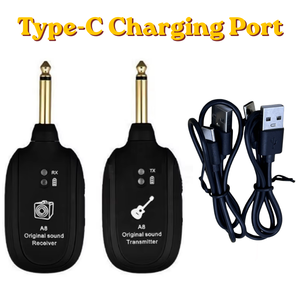
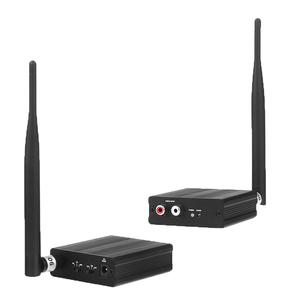
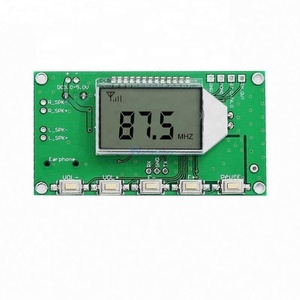
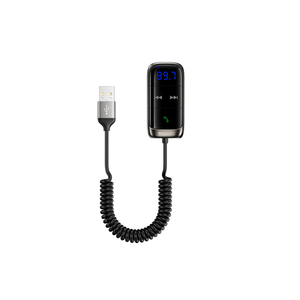
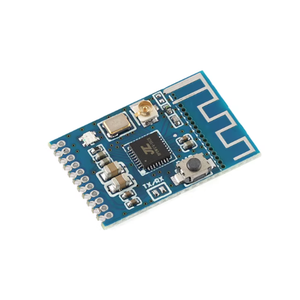
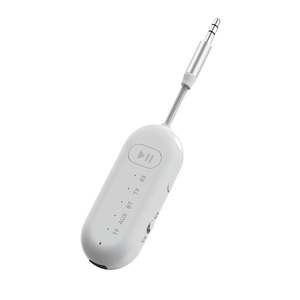
From acoustic micro-architecture to full-scale RF contract manufacturing, our engineering infrastructure delivers unmatched information gain and reliability across global markets.
Hardware-level volume capping and DSP protection compliant with EU hearing health standards for educational and consumer lines.
Turnkey FCC, CE, TELEC, UKCA, and RoHS certification documentation for fast international market clearance.
Custom PCB designs, specialized antenna tuning, injection mold tooling, and white-label firmware design.
Direct access to acoustic and RF engineers with rapid prototyping response and strict SLA guarantees.
The global wireless audio ecosystem is undergoing a generational shift driven by the transition from legacy Bluetooth Classic (A2DP) to Bluetooth 5.4 Low Energy (LE) Audio and Auracast™ broadcast capabilities. As an engineering-led OEM supplier founded in 2005, MEE Audio has tracked and directed key RF circuit innovations to deliver unparalleled information gain for institutional, aviation, consumer, and assistive audio procurement partners.
Modern commercial applications no longer tolerate high latency, frame drops, or single-receiver limitations. Today’s industrial requirements demand modularity, dynamic CODEC negotiation, and high multi-path immunity. Below is an engineering comparison of transmitter architectures shaping global procurement decisions for the next decade:
| Architecture Metric | Legacy Bluetooth 4.2 / 5.0 (A2DP) | Proprietary 2.4GHz RF (UHF) | Next-Gen LE Audio / Auracast™ (BT 5.4) |
|---|---|---|---|
| End-to-End Latency | 120ms – 220ms (High Lip-Sync Lag) | <5ms – 15ms (Ultra-Low) | 20ms – 30ms (Deterministic Low Latency) |
| Multi-Receiver Topology | Dual-Link (Max 2 Devices) | Unlimited (Point-to-Multipoint) | Unlimited (Auracast™ Broadcast Streams) |
| Audio CODEC & Efficiency | SBC / AAC (High Power Drain) | Uncompressed PCM / Proprietary | LC3 (Low Complexity Communication Codec) |
| RF Bandwidth Efficiency | 3 MHz Channel Width | 2 MHz – 4 MHz Fixed Bandwidth | Interleaved Multi-Stream / High Spectral Efficiency |
| Primary OEM Use Case | Legacy Retrofit Adapters | Musical Instruments & Gaming | Commercial TV Systems, Public Venues, Airlines |
A. Auracast™ Commercial Integration: Traditional transmitters require complex one-to-one pairing handshakes. Auracast™ allows a single OEM transmitter—such as our upgraded Connect Series modules—to broadcast localized audio streams to thousands of receiver nodes simultaneously without pairing friction. This technology is revolutionizing sports bars, airport terminal displays, cinema halls, and personal TV listening systems.
B. Hardware-Based DSP Lip-Sync Compensation: Latency in visual displays (micro-LED, OLED panels) often introduces asynchronous audio delay. Our custom transmitter motherboard designs incorporate onboard hardware delay buffers (0 to 250ms adjustment ranges), enabling precise lip-sync alignment directly at the transmission source.
C. Hybrid Multi-Input Routing Interfaces: Modern televisions and industrial consoles are phasing out analog 3.5mm outputs. Advanced sound transmitters must feature unified PCBA layouts supporting Optical TOSLINK, USB-C Audio Class 2.0, eARC/HDMI, and auto-sensing 3.5mm AUX inputs simultaneously to prevent signal degradation.
As enterprise buyers, brand owners, and institutional procurement officers navigate complex international supply chains, purchasing criteria for sound transmitters have evolved beyond basic cost-per-unit metrics. Long-term reliability, compliance scalability, and modular PCBA adaptabilities now dictate sourcing strategies.
Leading electronics brands are shifting away from buying fully enclosed retail-ready units toward sourcing pre-certified, surface-mount (SMT) transmitter sub-assemblies. This allows hardware integrators to drop low-latency sound transmitter modules directly into their master host enclosures (e.g., medical monitors, exercise treadmills, aircraft seat-back systems) while leveraging our existing FCC/CE RF filings to slash time-to-market by up to 70%.
Global regulatory frameworks—including updated ADA guidelines in the United States and the European Accessibility Act (EAA)—are mandating public and commercial spaces to offer direct wireless audio streams to hearing aids and personal listening devices. Forward-thinking buyers are procuring OEM sound transmitters with built-in LC3 assistive listening profiles to ensure total compliance across healthcare, hospitality, and corporate environments.
Strategic Purchasing Considerations for Exporters & Importers:
When placing volume OEM purchase orders, enterprise buyers should insist on rigorous hardware validation protocols. MEE Audio provides exhaustive testing documentation for all custom production runs, including:
Established in 2005, MEE Audio (Amsteltech) began with a single mission: engineering high-fidelity acoustic performance into accessible, ergonomic wireless hardware. Over two decades of specialized operational growth, our organization has expanded from a premium audio brand into a major contract engineering and OEM manufacturing partner for international distributors, educational districts, airlines, and consumer audio brands.
Our proprietary Connect Series redefined home TV listening by enabling dual-headphone low-latency transmission over analog and TOSLINK optical connections. We have extended this engineering capability into portable travel adapters (Connect Air), institutional high-power transmitters, and professional wireless guitar monitors.
Because we own the complete engineering stack—from initial PCB routing and RF antenna tuning to firmware development and acoustic driver matching—we offer OEM clients seamless customization options that typical trading suppliers cannot match.
Under our MEE Professional division, we engineer custom in-ear monitors for touring musicians and studio engineers, alongside hearing protection gear and KidJamz safe-listening headphones.
This deep heritage in hearing health directly influences our custom sound transmitter manufacturing. Every transmitter module is tuned for optimal dynamic range control, clean frequency response, and zero background hiss, ensuring that whether a transmitter powers a silent disco, an airplane seat-back, or a hospital room TV, sound reproduction remains crystal clear and safe.
Detailed technical answers to common questions asked by B2B buyers, product managers, and supply chain directors.
We provide full-stack OEM and ODM customization. You can customize the PCBA layout, chipset selection (Qualcomm, Actions, BES), RF power amplification (+3dBm to +20dBm for extended range), physical enclosure tooling, silk-screen logo placement, custom Bluetooth pairing names (SSID), pre-set equalizer profiles, firmware behavior (auto-power-on logic, sleep timeouts), and custom retail packaging.
Lip-sync latency occurs when audio decoding lags behind display rendering. Our sound transmitters incorporate low-latency CODECs such as aptX Low Latency, aptX Adaptive, and LC3 via LE Audio, dropping wireless transmission latency below 40ms (and down to <15ms on 2.4GHz proprietary systems). Standard Bluetooth transmitters often exhibit 150-220ms of latency, which creates obvious audio-to-video mismatch.
Yes. Our standard Bluetooth transmitters (such as the Connect and Connect Hub platforms) support Dual-Link technology, streaming audio to two separate Bluetooth receiving devices simultaneously with independent volume management. Furthermore, our next-gen Bluetooth 5.4 LE Audio and Auracast™ transmitters allow unlimited simultaneous receiver connections over a localized broadcast domain, perfect for silent discos, sports venues, and multi-user environments.
As a global exporter, all our factory-standard modules and custom OEM builds are designed to pass rigorous international compliance testing. We provide complete technical construction files (TCF) and test reports for FCC (USA), CE / RED (European Union), TELEC (Japan), UKCA (United Kingdom), RoHS, and REACH. We also assist OEM clients in transferring regulatory modular approvals to their custom brand names.
For standard white-label orders with custom logo branding and packaging, our minimum order quantity typically starts at 500 to 1,000 units with a lead time of 3 to 4 weeks. For fully custom ODM projects requiring new plastic injection molds, custom PCBA design, and specialized RF firmware development, MOQs start at 3,000 units, with a tooling and engineering turnaround time of 8 to 12 weeks.
Modern environments are cluttered with Wi-Fi routers, smart home gear, and cellular devices. Our transmitters utilize Adaptive Frequency Hopping (AFH) algorithms alongside optimized PCB trace antennas and optional external high-gain dipole antennas. By dynamically scanning and jumping away from crowded spectrum channels 1,600 times per second, our modules maintain uninterrupted audio streaming even in high-density corporate or public settings.
Partner with a proven acoustic engineering manufacturer. Contact our B2B project managers to request technical datasheets, request OEM PCBA sample kits, or receive a fast contract quotation.
Send an Inquiry