

Explore high-performance Bluetooth 6.0, LE Audio, broadcast transceiver modules, and turnkey audio adapters engineered by top Tier-1 ODM/OEM manufacturers.
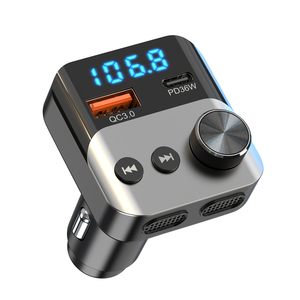
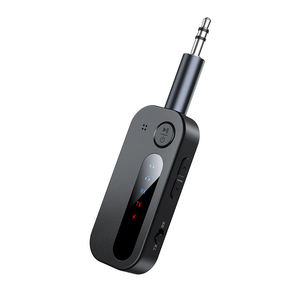
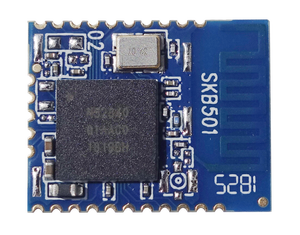
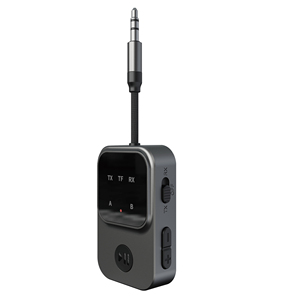
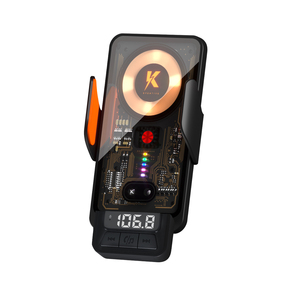
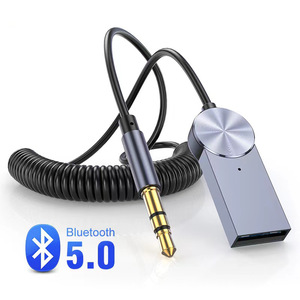
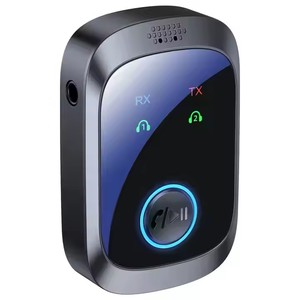
The global wireless audio transmitter ecosystem has undergone a structural paradigm shift. Driven by rapid advances in short-range Radio Frequency (RF) protocols, the market has transitioned beyond legacy Analog FM and standard Bluetooth Subband Coding (SBC) architectures toward ultra-low-latency Bluetooth 6.0 Channel Sounding, Bluetooth LE Audio (LC3 Codec Engine), Auracast™ Broadcast Infrastructure, and multi-protocol IoT mesh networks featuring Thread and Matter integration.
For enterprise procurement officers, OEM brand strategists, and supply chain directors, identifying an elite audio transmitter manufacturing partner requires evaluating far more than raw component cost. It requires a granular audit of factory RF calibration labs, Surface Mount Technology (SMT) yield capabilities, firmware-level DSP (Digital Signal Processing) design capabilities, and regulatory compliance standards across international target markets (FCC, CE RED, RoHS, BQB, and Anatel).
When conducting technical audits of Tier-1 and Tier-2 wireless audio factories, engineering teams utilize a multi-variable matrix to establish vendor operational health and production quality:
| Assessment Parameter | Tier-1 Factory Standard (Leading OEMs) | Tier-2 Standard Factory | Impact on Final Product Quality |
|---|---|---|---|
| RF Spectrum Calibration | Automated Agilent/Keysight Wireless Test Sets | Manual Spot Checking | Prevents frequency drift, packet loss, and inter-device interference. |
| Audio Codec Engineering | Native LC3, LC3plus, aptX Low Latency, LDAC DSP build | Generic SBC / AAC pipeline only | Eliminates audio-to-video lipsync delay in TV and gaming applications. |
| Multi-Link Audio Sync | Dual-stream synchronous broadcast (<1ms inter-ear skew) | Asynchronous multiplexing | Ensures crystal-clear dual-headphone listening without phase artifacts. |
| SMT Line Precision | High-speed Panasonic/Fuji placement (0201 component fit) | Standard density placement | Enables ultra-compact form factors suitable for sleep & in-flight adapters. |
| Regulatory Certification | Pre-certified BQB, FCC, CE, TELEC, KC modules | Uncertified raw PCB board layout | Accelerates global time-to-market by 8 to 14 weeks. |
Information Gain Key Takeaway: Modern audio procurement requires specifying Bluetooth 6.0 and LE Audio compatible chipsets (e.g., Nordic nRF54 Series, Qualcomm QCC Series) at the RF module design phase to ensure forward-compatibility with Auracast public broadcast systems and low-energy IoT networks.
Understanding technological roadmaps allows commercial buyers to future-proof their product portfolios against rapid obsolescence. Over the next 36 to 60 months, four fundamental hardware innovations will dictate consumer demand and commercial specification standards across home entertainment, automotive electronics, aviation in-flight entertainment, and industrial smart sensing.
Bluetooth 6.0 introduces true distance awareness through Channel Sounding, achieving centimeter-level spatial positioning. Audio transmitters equipped with BT 6.0 allow smart home systems to direct audio streams automatically to whichever room or headphone user is nearby.
Moving away from point-to-point pairing, Auracast empowers a single transmitter (in TVs, airports, or sports bars) to broadcast uncompressed low-latency stereo audio to an unlimited number of nearby Bluetooth receivers and hearing aids simultaneously.
Modern RF transmitter modules (such as the nRF54L15 engine) seamlessly bridge 2.4 GHz custom protocols with Thread and Matter IoT frameworks. This allows audio transceivers to double as smart home mesh hubs while delivering high-fidelity audio streams.
Historically, audio engineering involved a trade-off: high bitrate audio (such as uncompressed 24-bit/96kHz FLAC or WAV) required buffer windows that added 150ms–300ms of latency, rendering audio unsuitable for video synchronization. Modern Low-Complexity Communication Codecs (LC3 and LC3plus) implemented by top-tier factories achieve superior psychoacoustic performance at half the bitrate of legacy SBC, compressing transmission latency to below 15ms.
| Codec Protocol | Average Bitrate | End-to-End Latency | Lip-Sync Perception | Optimal Business Application |
|---|---|---|---|---|
| Legacy SBC | 328 kbps | 170 ms - 220 ms | Highly Noticeable Lag | Legacy basic audio streaming |
| aptX Low Latency | 352 kbps | <40 ms | Imperceptible to Most | TV Transmitter Dongles & Gaming |
| LE Audio LC3 Standard | 160 - 345 kbps | 20 ms - 30 ms | Seamless Real-Time Sync | In-flight Adapters & Hearing Aids |
| Ultra-Low Latency 2.4G Custom | 2.0 Mbps Raw | <12 ms | Zero Perceptible Lag | Professional Live Monitoring & Esports |
Global electronics sourcing strategies are transitioning from low-cost transactional purchasing to strategic co-development. B2B importers, audio brands, and enterprise institutional buyers must navigate evolving supply chain complexities by paying attention to key emerging procurement paradigms:
To combat chip shortages and reduce PCB layout redesign costs, top procurement divisions are increasingly sourcing pre-certified, surface-mountable System-on-Chip (SoC) transmitter modules rather than assembling discrete IC components from multiple vendors.
Single-function transmitters are rapidly being replaced by dual-role hardware architectures. Modern consumer demand favors units that toggle seamlessly between Transmit (TX) mode (e.g., streaming TV sound to headphones) and Receive (RX) mode (e.g., converting legacy home stereos into Bluetooth receivers).
Procurement policies across North America and the European Union now enforce strict standby power limits (<0.5W) and mandate USB-C Power Delivery compliance. Leading factories integrate smart power management ICs (PMICs) to meet regional green energy mandates.
As an established pioneer in audio engineering and wireless connectivity since 2005, the enterprise framework backing brands like MEE audio illustrates the quality benchmarks required by high-volume global retailers, school districts, airline fleets, and clinical environments. Combining deep acoustic heritage with rigorous RF hardware engineering creates a distinct competitive advantage:
Unlike software-based volume limiters susceptible to mobile OS overrides, engineered audio solutions feature physical hardware circuit caps (e.g., 85 dB / 94 dB dual-threshold limits). This hardware discipline protects listeners in educational, clinical, and pediatric applications.
By manufacturing both the RF audio transmitter and the receiving headphone/earbud hardware within the same quality ecosystem, engineers eliminate inter-vendor protocol mismatch. Factory pre-pairing guarantees sub-40ms latency out of the box with zero user intervention.
Institutional buyers require scalable logistics, published warranty documentation, direct engineering support lines, and compliant packaging. A structured group order pipeline simplifies bulk purchasing for flight operators, hospitality chains, and educational buyers.
For standard pre-certified modules (e.g., nRF54L15 or standard BT 5.3 dongle PCBA), MOQ typically starts between 500 and 1,000 units. For fully customized tooling, proprietary PCB layout design, or custom injection-molded enclosures, factory MOQs generally range from 3,000 to 5,000 units per production run.
Tier-1 manufacturers deploy hardware-accelerated DSP engines running aptX Low Latency or LE Audio LC3 codecs. By controlling bit-buffer depth and enforcing fixed frame-period timing (e.g., 5ms or 10ms frame intervals), end-to-end delay is held below 40ms—the human threshold where visual lip movement and auditory perception decouple.
Essential certifications include FCC Part 15 (Subpart C) for North America, CE RED (Radio Equipment Directive) for Europe, TELEC/MIC for Japan, and BQB (Bluetooth SIG End Product Listing). Environmental compliance regulations such as RoHS 3, REACH SVHC, and WEEE are mandatory for international retail clearance.
Yes. Advanced transceivers feature Dual-Stream (Dual-Link) technology. The RF hardware utilizes time-division multiplexing or independent dual-radio IC channels to transmit stereo audio packets to two independent Bluetooth receiving units at the exact same audio sampling rate.
TOSLINK optical inputs accept pure digital audio signals (PCM) directly from the television's sound processor, bypassing noisy onboard analog DAC circuits. This eliminates ground loop hum, static background hiss, and electromagnetic interference (EMI) commonly associated with legacy analog cables.
Connect directly with our engineering and procurement team to request custom RF module specifications, sample units, compliance documentation, or volume B2B quotes.
Send an Inquiry