

Explore our globally validated OEM/ODM product architectures engineered specifically for side-sleeping comfort, noise isolation, structural durability, and low-latency audio transmission. Each unit is manufactured under ISO9001 and BSCI factory audits.
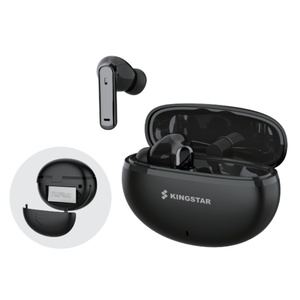
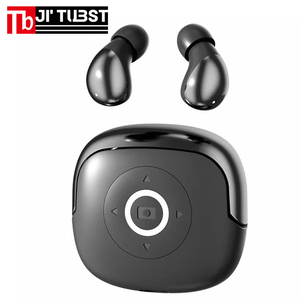
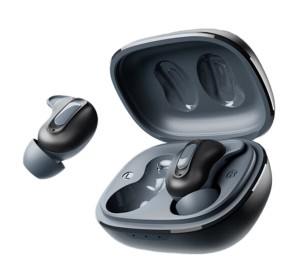
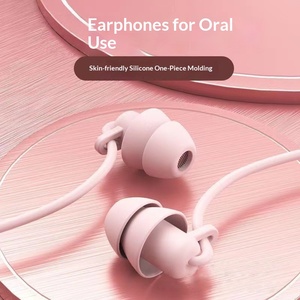
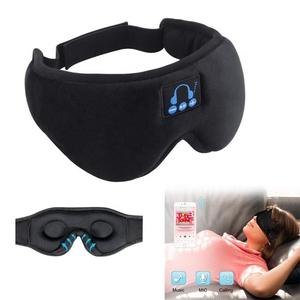
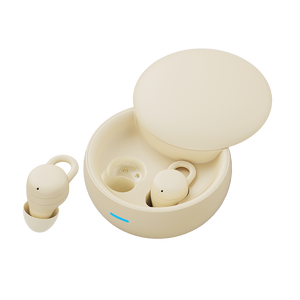
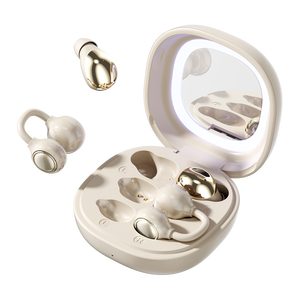
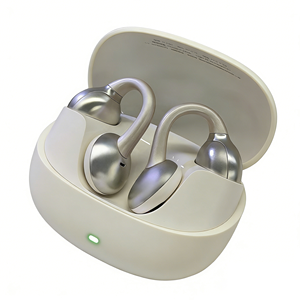
The international demand for sleep audio technology has surged, driven by growing consumer awareness of sleep hygiene, urban noise pollution, and shift-work sleep disruption. However, manufacturing true sleeping earbuds—as opposed to standard True Wireless Stereo (TWS) earphones—presents complex bio-mechanical and acoustic engineering challenges. A top-tier sleeping earbuds factory must possess specialized manufacturing processes that prioritize anatomical zero-pressure fit, ultra-compact PCB assembly, micro-battery safety, and specialized frequency tuning.
When global audio brands, medical device distributors, and private-label buyers audit sleeping earbud manufacturers, the evaluation focuses on four fundamental engineering competencies:
Standard TWS earbuds utilize 8mm to 13mm dynamic drivers housed in thick plastic casings that protrude beyond the tragus. When a side-sleeper rests their ear against a pillow, this protrusion exerts mechanical force exceeding 45 mmHg onto the concha, causing cartilage inflammation. Leading sleeping earbud factories engineer miniature 4mm–6mm dynamic drivers or balanced armature units housed in ultra-thin micro-cavities (under 7.5mm total thickness), ensuring the earpiece sits completely flush inside the ear canal.
Superior factories maintain cleanroom facilities for Liquid Silicone Rubber (LSR) overmolding. Unlike rigid ABS plastic, medical-grade LSR coats the micro-earpiece in a soft, hypoallergenic skin (Shore A hardness between 20 to 40). This provides mechanical cushioning, bio-compatibility for extended overnight contact, and passive acoustic sealing that blocks up to 24dB of environmental noise without active electronic power.
Because sleep earbuds are worn inside the ear canal for 6 to 8 continuous hours during unconsciousness, battery safety protocols are non-negotiable. Qualified factories utilize high-density button cell batteries equipped with double-layer NTC thermal protection circuits. Surface Mount Technology (SMT) lines must handle micro-flexible PCBs (Rigid-Flex) to consolidate the Bluetooth SoC, power management IC, and antenna within spaces smaller than 0.8 cm³.
Understanding the component-level differences between commodity consumer audio factories and specialized sleep audio manufacturing plants is crucial for procurement managers ensuring product reliability and brand equity.
| Engineering Parameter | Standard Consumer TWS Factory | Top-Tier Sleep Earbuds OEM/ODM Factory |
|---|---|---|
| Earpiece Profile Depth | 12mm – 18mm (Protrudes past tragus) | 5.5mm – 8.0mm (Flushes inside concha) |
| Single Earpiece Weight | 4.2g – 6.5g | 2.3g – 3.2g (Ultra-stealth micro build) |
| Housing Material | Standard Injection Molded ABS/PC Plastic | Bio-compatible Liquid Silicone (LSR) / Soft TPE |
| Acoustic Tuning Focus | V-shaped curve (Exaggerated Bass/Treble) | Pink Noise / Delta Wave / Soothing Frequency Flat Response |
| Thermal Safety Circuitry | Single NTC protection on charging case | Dual NTC + Current Limiters on individual Micro-Earbuds |
| Sleep Ergonomics Testing | Basic artificial ear simulator testing | Pillow Pressure Mapping (mmHg) & Side-Sleeping Simulation |
The sleep technology market is rapidly transitioning from passive sound masking to intelligent, biometrically aware sleep enhancement systems. OEM/ODM buyers looking to maintain a competitive market edge must align with factories investing in the following third-generation technical capabilities:
Next-generation sleep earbuds rely heavily on Bluetooth 5.4 Low Energy (LE) Audio. The implementation of the LC3 (Low Complexity Communication Codec) allows high-fidelity audio streaming at half the bit-rate of legacy SBC codecs. For sleeping earbud manufacturing, this translates directly to a 40% reduction in power consumption. Micro-batteries can be downsized further without compromising the 8-hour continuous sleep playback threshold.
Contract manufacturers are increasingly embedding micro-photoplethysmography (PPG) sensors directly into sleep earbud tips. Because the auditory canal provides high capillary density and minimal light interference, in-ear PPG sensors track heart rate variability (HRV), blood oxygen saturation (SpO2), and sleep stages (Light, Deep, REM) with higher accuracy than wrist-worn wearables. Modern factories are building automated calibration fixtures specifically for in-ear biosensor testing.
While Active Noise Cancellation (ANC) is effective for low-frequency engine hums, traditional ANC generates dynamic phase-inversion waves that can cause inner-ear pressure discomfort for static sleepers. The trend in premium factories is moving toward Hybrid Acoustic Architecture: pairing passive noise isolation (PNI) with real-time adaptive sound masking. When environmental spikes (snoring, traffic) are detected by external mics, internal DSP engines blend therapeutic pink noise or white noise algorithms smoothly to protect sleep continuity without pressure buildup.
Regulatory frameworks such as the EU Eco-Design Directive and RoHS/REACH compliance are driving factories to adopt closed-loop supply chains. Leading manufacturers now offer PCR (Post-Consumer Recycled) plastics for charging cases, medical-grade biodegradable silicone tips, and 100% recycled Neodymium (NdFeB) magnets inside micro-dynamic drivers.
Engineered on a legacy of precision audio development since 2005, our manufacturing network bridges high-fidelity sound architecture with rigorous health-focused audio protection standards. Operating under the operational philosophy of "Music Enjoyment for Everyone," our industrial capabilities provide complete vertical integration for global brand partners, distributor networks, and institutional buyers.
Equipped with high-precision CNC toolrooms and Swiss-made EDM equipment, capable of achieving mold tolerances within ±0.005mm for complex micro-earpiece enclosures.
100% acoustic frequency response matching, RF wireless chamber testing, drop tests, thermal cycling, and IPX water-ingress testing across automated production lines.
Full turn-key support for international regulatory approvals, including FCC, CE, RoHS, REACH, KC, TELEC, and UN38.3 battery transport standards.
For standard private-label branding (custom logo printing and customized packaging on existing micro-acoustic tooling), our standard MOQ starts at 1,000 sets per model. For complete ODM projects requiring custom shell molding, silicone tip development, and specialized circuit design, the initial tooling MOQ is typically 3,000 to 5,000 units, depending on chip set availability and enclosure complexity.
Factories utilize 3D ear canal laser scanning and finite element analysis (FEA) to map pressure points against standard human concha anatomy. Comfort is achieved by combining three design rules: limiting total external earpiece depth below 7.5mm, utilizing medical-grade liquid silicone (Shore A 20-30) for skin contact surfaces, and angling the nozzle acoustic stem at 45 degrees to match the natural direction of the auditory meatus.
Sleep earbuds fall under strict consumer electronics and health product regulations. For North America, products require FCC ID (for Bluetooth emissions), UL/IEC 62368-1 (audio safety), and UN38.3 + MSDS (lithium battery safety during air freight). For Europe, CE-RED directive compliance, RoHS (restriction of hazardous substances), REACH, and WEEE registration are mandatory. Medical-grade silicone parts also require FDA/LFGB biocompatibility testing.
Yes. Modern sleep earbuds achieve 6 to 10 hours of continuous playback by adopting high energy-density lithium button cells (often utilizing 3.7V–4.35V chemistry rated above 450 Wh/L) coupled with ultra-low power Bluetooth 5.3/5.4 SOCs (such as JL, Realtek, or Qualcomm platforms). Additionally, sleep-specific firmware optimizes energy consumption by disabling high-power micro-LEDs during streaming and offering automated sleep-timer cutoffs.
Passive Noise Isolation (PNI) relies on precise anatomical sealing to physically block high-frequency noises such as voices, alarms, and pet movement, typically reducing sound by 20dB to 26dB without drawing battery power. Active Noise Cancellation (ANC) generates inverse audio waves to neutralize low-frequency hums like air conditioning or traffic. Top sleep earbud designs prioritize physical PNI fit first, as poor PNI cannot be compensated for by electronic ANC inside a tiny micro-enclosure.
Contact our OEM/ODM engineering desk today to request sample kits, detailed factory audit reports, technical specification sheets, and bulk volume quotes.