Technical Whitepaper & Regional Guide
Architectural Audio Splitting & Signal Multiplexing in Tokyo’s High-Density Urban Landscape
In the contemporary Japanese telecommunications and consumer electronics marketplace, the demand for precision sound signal distribution—commonly referred to as audio splitting—has undergone a structural transformation. Tokyo, as Japan's dense economic epicenter encompassing major commercial districts such as Shibuya, Shinjuku, Akihabara, and Chiyoda, presents a unique acoustic and electro-magnetic ecosystem. High residential density, stringent noise pollution mandates in apartment complexes (Mansion), and a massive surge in personal audio consumption have necessitated advanced multi-channel audio splitters, low-latency Bluetooth transceivers, and specialized signal distribution hardware.
As a premier audio splitter factory and exporter serving Tokyo, our manufacturing methodology integrates deep RF circuit engineering, hardware-level DSP volume limiting, and multi-protocol wireless codecs (including Bluetooth 6.0 Mesh and LE Audio LC3). This comprehensive technical manual examines the engineering principles, regulatory compliance standards, and localized deployment scenarios critical for B2B procurement managers, system integrators, and electronics distributors operating in the Greater Tokyo Area.
"The modern Tokyo audio environment requires more than simple signal passive division; it demands active impedance matching, galvanic isolation, sub-15 millisecond latency sync, and flawless compatibility with Japanese radio and electrical safety laws."
1. Fundamental Engineering Principles of Modern Audio Splitting
Traditional passive Y-splitters suffer from severe signal degradation, impedance mismatching, and catastrophic voltage drops when driving multiple loads simultaneously. When an analog 3.5mm TRS stereo signal is passively divided across multiple headphones or amplification nodes, the overall load impedance drops dramatically. This leads to frequency response distortion—specifically a loss of low-end bass extension—and reduced output headroom.
Our OEM/ODM factory solutions overcome these physical limitations through two distinct architecture paradigms:
- Active Analog & TOSLINK Optical Multiplexing: Utilizing low-noise operational amplifiers (Op-Amps) and digital-to-analog converters (DACs) to buffer each output channel independently. This guarantees zero crosstalk between listeners and maintains a pristine Signal-to-Noise Ratio (SNR > 105dB) even when driving four discrete 32-ohm headphone driver units.
- Digital Isochronous Wireless Splitting (BLE Audio & BT 6.0): Replacing copper wires with Isochronous Adaptation Layer (IAL) wireless protocols. By utilizing multi-stream audio features inherent in modern Bluetooth specs, a single master transmitter can broadcast uncompressed, ultra-low-latency sound streams to dual or multiple receiving nodes simultaneously without lip-sync drift.
2. Tokyo-Specific Market Dynamics & Regulatory Compliance Framework
Exporting electronic audio hardware into Japan demands strict adherence to national regulatory frameworks administered by the Ministry of Internal Affairs and Communications (MIC) and the Ministry of Economy, Trade and Industry (METI). Distributors in Tokyo cannot afford custom delays or regulatory confiscation due to missing compliance documentation.
Key regulatory compliance pillars built into our factory export process include:
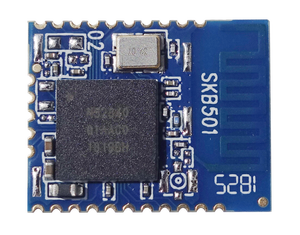
- TELEC / MIC Radio Law Certification: All wireless transmitters, Bluetooth 5.3/5.4/6.0 modules, and FM transceivers exported to Tokyo carry official GITEKI marks (Technical Conformity Mark). Our factory conducts rigorous spurious emission testing in shielded anechoic chambers to comply with Japan's Radio Law (Radio Act No. 131).
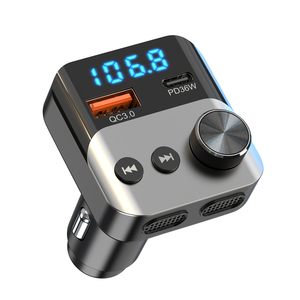
- PSE Mark (Electrical Appliance and Material Safety Law): AC adapters, fast-charging car splitters (such as our PD 36W series), and wireless charging docks supplied to Japanese retail outlets undergo strict high-voltage testing and thermal insulation validation to secure Diamond or Circle PSE compliance.
- VCCI Class B Electromagnetic Compatibility: To prevent radio frequency interference in crowded Tokyo commercial zones and multi-tenant residential structures, our audio splitters are designed with high-grade aluminum shielding and filtered PCB traces to achieve VCCI Class B EMC certification.