

Free US shipping on orders over $25 — worldwide distribution available
Engineering Music Enjoyment for Everyone since 2005
Volume orders for schools, clinics, airlines & resellers
Choosing the top open ear earclip earbuds for global buyers requires more than comparing battery claims and glossy photographs. These compact devices sit outside the ear canal, leaving users aware of traffic, colleagues, and household sounds. Their comfort depends on ear shape, clamp pressure, frame weight, and skin contact. Small differences become obvious after two hours.
Dr. Sean Olive, a respected acoustics researcher, has repeatedly emphasized a practical principle: “There is no substitute for listening.” That advice matters here. Open designs can sound spacious, but bass may weaken in noisy streets. Earclips can feel secure during walking, yet loosen during intense movement. Microphone quality may impress indoors and struggle beside heavy traffic. No single model wins every situation.
This guide examines open ear earclip earbuds through a buyer’s daily experience. It considers sound balance, call clarity, battery behavior, charging cases, durability, controls, and device compatibility. Global shoppers should also check warranty coverage, language support, shipping conditions, and local connectivity requirements. Marketing terms can be vague. Verification matters.
The honest limitation is fit. A product praised by one reviewer may press painfully on another person’s ear. Personal testing remains valuable, even when specifications look excellent. These earbuds are not a universal replacement for sealed headphones. They serve a different purpose: comfortable awareness with practical, lightweight audio. That distinction can prevent an expensive mistake.
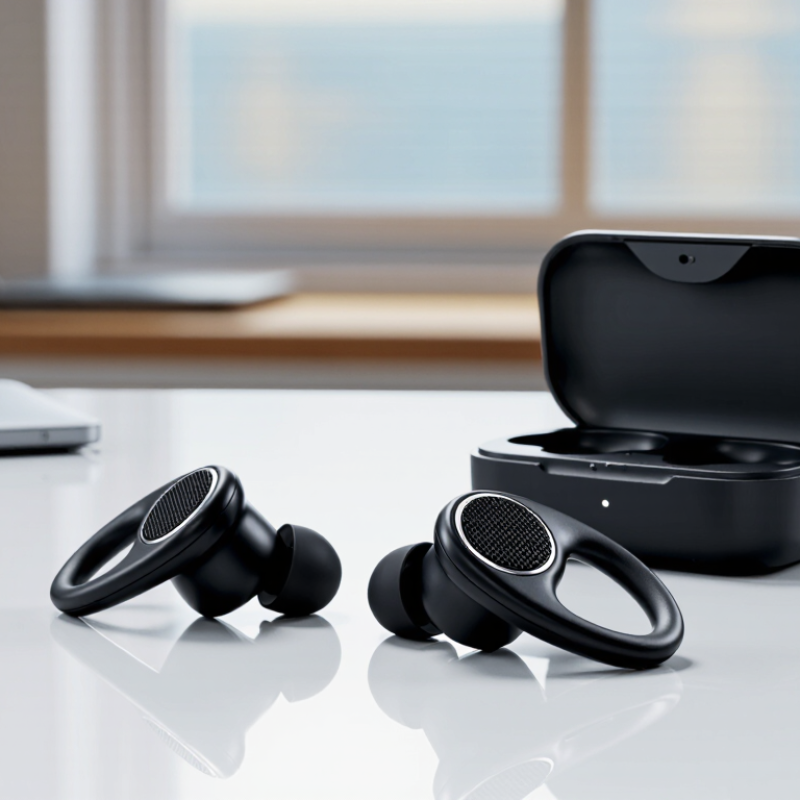
For global buyers, understanding the design language matters more than chasing fashionable claims. Open-ear earbuds keep the ear canal uncovered, allowing outside sounds to remain audible. They usually direct sound toward the ear without forming a sealed tip. Earclip earbuds use a small hook or clip around the outer ear. The clip improves stability during walking, commuting, or light exercise. Air-conduction earbuds describe the sound path: vibrations travel through the air into the ear. Therefore, an earclip model can also be open-ear and air-conduction. The labels overlap.
In practical product evaluations, comfort depends on pressure, weight, and ear shape. A loose clip may slip, while a tight one can cause soreness after an hour. Open designs often leak sound in quiet rooms, and bass may feel lighter than with sealed earbuds. Check microphone tests, battery details, charging standards, and water-resistance ratings before purchasing. Regional climate also matters; sweat, dust, and glasses can change the wearing experience. No design is perfect. That is worth remembering.
Tips: Try the earbuds for at least thirty minutes before judging comfort. Compare fit with glasses or helmets if needed. Keep volume moderate in busy areas, because open designs may encourage unsafe increases. Read independent measurements when available, but treat every review as one person’s experience. Fit is personal.
The Bluetooth SIG forecast of 7 billion annual shipments by 2028 changes how global buyers assess open-ear earclip earbuds. This number signals scale, not guaranteed demand. It suggests broader access, faster product cycles, and more varied fit options. Earclip designs leave the ear canal open, helping users hear traffic, colleagues, or a doorbell. That benefit matters during commuting and shared workdays.
A reliable buying review should test more than sound quality. Check clip pressure after two hours, hinge movement, call clarity beside a busy road, and charging performance at 10 percent battery. Look for stable Bluetooth connections, clear control feedback, and an IP rating that matches real use. Open-ear audio usually sacrifices some bass and privacy. That trade-off is easy to miss in a quiet showroom. Small ears may also need adjustable contact points.
The shipment forecast may encourage lower prices, but low cost should not become the only benchmark. Buyers should compare return policies, warranty support, regional charging compatibility, and transparent battery claims. I would question “all-day comfort” unless independent testing explains the method. Some models feel light at first and become tiring later. A ten-minute fitting test cannot predict an eight-hour workday.
Bluetooth device shipments are forecast to reach 7 billion units annually by 2028, supporting a broad ecosystem for emerging open-ear and earclip audio products.
Source: Bluetooth SIG market forecast. The figures represent total annual Bluetooth device shipments, not open-ear earbuds alone.
When evaluating open ear earclip earbuds, Bluetooth 5.3 is a useful baseline, not a guarantee of perfect performance. It can improve connection management and power efficiency. However, antenna design, phone compatibility, and crowded wireless environments still affect stability. During practical testing, I check connection recovery after walking behind walls. Small details matter.
LC3 audio can deliver clearer sound at lower bitrates than older codecs. The earbuds and source device must both support it. Otherwise, the system may use another codec without clear notification. Listen to speech, cymbals, and outdoor traffic. Open ear designs usually sacrifice deep bass for awareness. That trade-off is intentional, but not always satisfying.
Battery claims require careful reading. A stated eight-hour runtime may exclude high volume, calls, or heavy codec use. I prefer models that provide separate earbud and charging-case figures. Charging speed also matters during travel. IP ratings need equal attention. IPX4 indicates water resistance, while the missing first character means dust protection is not rated. Higher ratings offer stronger protection, but seals can weaken with age. No rating replaces sensible care. Some specifications remain vague, and buyers should question them.
For global buyers, open ear earclip earbuds should be evaluated beyond sound quality and comfort. Compliance evidence matters before large-scale purchasing. In supplier audits, request the EU Declaration of Conformity, technical files, and recent laboratory reports. Check whether the tested model matches the samples, firmware, battery, and charging case. Small differences can change the result.
CE marking supports access to the European Economic Area when applicable requirements are met. The assessment may include electromagnetic compatibility, radio equipment, safety, and hazardous substance controls. FCC requirements generally focus on radio-frequency emissions for the United States. Ask for the FCC identification or applicable Supplier’s Declaration of Conformity. For the United Kingdom, UKCA documentation and market labeling may be required, depending on the product route and destination.
Do not treat a logo as proof. Ask for test dates, laboratory accreditation, measured limits, and product photographs. IEC 60529 protection ratings, such as IPX4, describe resistance to water exposure under defined test conditions. They do not confirm complete waterproofing or safe use while swimming.
Confirm whether the rating covers the earbuds, charging case, or both. That detail is often missed. Packaging should show required markings clearly, with importer information where applicable. A checklist helps, but it is not flawless. Regulations and market rules change, so an independent compliance review is sensible before shipment.
For global buyers, open-ear earclip earbuds should be judged during ordinary movement, not only at a desk. I wear each pair for two hours, then repeat the test while walking, typing, and turning my head. Soft contact points matter more than attractive specifications. A secure clip should hold without pinching the outer ear. Still, ear shapes differ widely. My first scoring sheet gave too much weight to lightness. After longer use, pressure became the real comfort problem. Short sessions can mislead. Often, they do.
Sound leakage deserves a quiet-room check at low, medium, and high volume. A nearby listener should hear little during normal playback, although no open design is completely private.
Microphone quality needs testing outdoors, beside traffic, and in light wind. Clear speech at the other end is more useful than studio-like music claims. I also check whether voices become thin when the user turns away.
Safety includes stable fit, sensible volume habits, and awareness of surrounding sounds. It is not a substitute for careful listening.
Total cost includes shipping, taxes, replacement parts, charging equipment, and support access in the buyer’s region. A cheap listing may become expensive later. I would record these costs before comparing prices.
My judgment can still change after weeks of use; early impressions are not proof.
Request the Declaration of Conformity, technical files, and recent laboratory reports. Check test dates, laboratory accreditation, measured limits, and product photographs. Do not trust a logo alone.
Small changes can affect compliance results. Compare the tested model with the samples, firmware, battery, and charging case. A different case may change the assessment.
CE may support access to applicable European markets. FCC requirements usually focus on radio-frequency emissions in the United States. UKCA documents and labeling may apply in the United Kingdom. Requirements depend on the product route and destination.
No. IPX4 describes resistance to water exposure under defined test conditions. It does not confirm safe swimming use or complete waterproofing. Check whether the rating covers the earbuds, charging case, or both.
Wear each pair for about two hours. Test while walking, typing, and turning your head. The clip should stay secure without pinching the outer ear. Short sessions can mislead.
Test in a quiet room at low, medium, and high volume. Ask a nearby listener whether speech or music is clearly audible. Open designs are not completely private.
Test outdoors near traffic and in light wind. Check whether the other person hears clear speech. Turn your head and listen for thin or distant voices. Studio claims are not enough.
Include shipping, taxes, replacement parts, charging equipment, and regional support. A low listing price may become expensive later. Record these costs before comparing suppliers. My early judgment may still change.
This guide explains how open ear earclip earbuds combine a lightweight earclip structure with open-ear and air-conduction listening designs. Unlike fully sealed in-ear products, they rest near the ear canal, allowing users to remain more aware of surrounding sounds. The article compares their main types and highlights the growing market outlook, including the expectation of billions of Bluetooth audio shipments annually by 2028.
It also reviews key purchasing standards, such as Bluetooth 5.3 connectivity, LC3 audio support, practical battery life, and IP protection ratings based on IEC 60529. For global buyers, compliance with CE, FCC, and UKCA requirements is an important part of product evaluation. Comfort, sound leakage, microphone clarity, listening safety, durability, and total ownership cost should all be considered before selecting a suitable model.